 how-to
7 Facts on Maryland Child Support and Private School Tuition
Last Updated: November 2, 2026
Quick Summary
Yes, a Maryland court can order parents to share private school tuition, but it is never automatic. Judges decide case by case, looking at the child's educational needs, history, and each parent's finances, and tuition is treated as a separate education expense rather than part of basic child support.
- Private school tuition is not a line item on Maryland's child support worksheet.
- Courts weigh the child's educational needs, prior school history, and stability.
- Judges decide on documents, so gather tuition invoices, school records, and evaluations.
- A tuition order should state a percentage or dollar split, payment timing, and tax benefit owner.
Table of Contents
- Can a Maryland Court Order Parents to Pay Private School Tuition?
- How Maryland Courts Decide Whether Private School Is Appropriate
- Maryland Child Support Guidelines and How Tuition Fits In
- Requesting a Private School Tuition Contribution: A Step-by-Step Process
- Changing an Existing Order or Agreement on School Costs
- Shared School Decisions and What Happens When Parents Disagree
- Schedule Your Free Consultation to Review Your School Cost Question
- Frequently Asked Questions
Can a Maryland Court Order Parents to Pay Private School Tuition?
Yes, a Maryland court can order parents to share private school tuition, but it is never automatic. Judges look at each family's facts before deciding.
Many parents assume private school costs fall under the regular support order. They often do not. A parent who wants a tuition contribution usually needs to ask the court directly, and show why the school is necessary for the child.
Here is what this means in practice:
- Tuition is not built into standard child support
- A court will not order it just because one parent wants it
- The request must be supported with facts about the child and the family
How Maryland Courts Decide Whether Private School Is Appropriate
Courts decide the question case by case. The judge looks at what the child needs, not what either parent prefers. There is no single checklist that applies to every family, but several factors come up again and again.
Key factors judges often consider:
- The child's educational needs and any learning challenges
- The child's history at the current or prior school
- Whether the school serves a specific need the public school cannot meet
A parent who wants private school should be ready to explain why. Vague preference rarely wins. Specific, documented need carries much more weight.
The Child's Educational History and Prior Private School Attendance
A child's school record often tells the judge more than any argument. If the child attended private school before the separation, that history helps. Judges may ask whether the child did well there, and whether leaving it would harm progress.
Common evidence includes:
- Report cards and progress reports from both schools
- Enrollment and tuition payment records
- Teacher notes or letters about the child's needs
A common mistake is leaving out the older records. Gather them early.
The Child's Need for Stability, Continuity and Special Programs
Stability matters to judges. A child who has built friendships and routines at a school may be harmed by a sudden move. The court may weigh that continuity heavily.
Special programs can also support a request. If the child needs a specialized program, such as support for a learning disability, that the private school offers and the public school does not, the judge may take notice.
Maryland Child Support Guidelines and How Tuition Fits In
Maryland's child support guidelines set a presumptive support amount based on the parents' incomes and certain adjustments, and the guideline worksheet is the starting point for the calculation. Parents should confirm the current worksheet and its rules with the official Maryland Judiciary sources. Private school tuition is not a line item on that worksheet. That single fact drives most of the confusion in these cases.
Two separate decisions, one order
A tuition request usually involves two distinct questions the court answers in sequence:
- What is the guideline support amount? The court calculates basic support from the worksheet using both incomes and the statutory adjustments.
- Should there be an additional education contribution? The court separately decides whether private school is appropriate and, if so, how the tuition is shared.
Because these are separate decisions, a parent should not assume the guideline figure already covers the school bill, and a parent should not assume that winning a tuition order changes the basic support number. In practice, courts often issue one order that states the guideline amount and then adds a separate tuition obligation with its own payment terms.
How the tuition split is set
There is no statutory formula for dividing private school tuition. A court may allocate tuition in proportion to each parent's income, but the judge retains discretion and may adjust the split based on the child's needs, the parents' other obligations, and any prior agreement.
Watch out: an order that says only "parents shall share tuition" without a percentage or dollar figure is difficult to enforce and often leads to a second trip to court.
What the tuition order should specify
A well-drafted tuition provision typically addresses:
- The annual tuition figure and the school year it covers
- Each parent's percentage share and the resulting dollar amount
- Payment timing (for example, monthly, per semester, or on the school's due dates)
Interaction with modification
If a tuition order is already in place and income or tuition changes, either parent can seek modification. A significant change in either parent's income or a substantial tuition increase can qualify as a material change in circumstances. Until a court modifies the order, the existing obligation remains in force, and a parent who stops paying unilaterally risks an enforcement action.
Where to confirm current figures
The guideline worksheet, the self-support reserve, and the statutory adjustments are updated periodically. The Maryland Judiciary publishes the current child support worksheet and instructions, and the circuit court clerk's office can confirm the forms in use. Because the worksheet inputs and the tuition order are separate, parents should prepare both sets of numbers before any hearing.
Requesting a Private School Tuition Contribution: A Step-by-Step Process
Judges generally decide these requests on evidence, so a parent who brings organized records and a clear number is better positioned than one who simply argues the school is better. Below is a general sequence of steps that parents often consider when preparing a tuition request.
Schedule Your Free Consultation →
Step 1: Confirm what the existing order or agreement already says
Before you file anything, read the current child support order, the parenting plan, and any settlement agreement. Look for three things: whether education expenses are addressed at all, whether decision-making authority is joint or sole, and whether there is a mediation or dispute-resolution clause you must use first.
Watch out: filing a motion before exhausting a required mediation clause can get the motion kicked back or delayed, so check the order's dispute-resolution language first.
Step 2: Build the evidence file before you draft anything
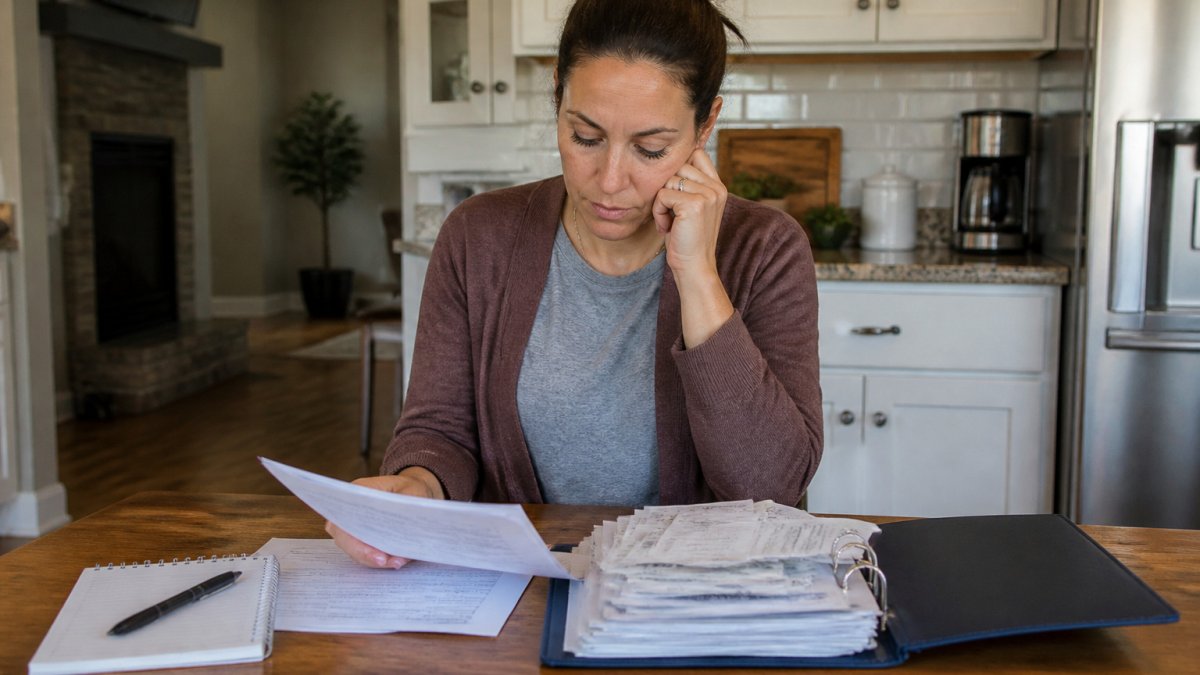
Judges decide these requests on documents. Assemble the following in a single indexed binder, with copies for the court and the other side:
- Tuition invoices and enrollment contracts showing the actual annual cost, payment schedule, and any financial aid already applied.
- School records, report cards, progress reports, attendance, and teacher comments from the current school and any prior school.
- Educational evaluations, IEP or 504 records from a public school, private psychoeducational testing, speech or occupational therapy reports, and any diagnostician letters.
Step 3: Put a specific proposal in writing
Courts respond better to a defined ask than to an open-ended request. State the annual tuition, the proposed split (for example, a percentage tied to each parent's income share), the payment timing, and who claims any education tax benefit. Send it to the other parent in writing and keep a copy. Many cases settle at this stage because the other parent sees the documentation and prefers a negotiated number to a hearing.
Step 4: File the right pleading
If the parents already have a child support order, the usual path is a motion to modify child support or a motion to establish or enforce an education expense contribution, filed in the circuit court that entered the order. If there is no order yet, the request is typically raised within a custody and child support action.
Step 5: Prepare for the hearing
At the hearing, expect the judge to ask why this school, why now, and who can pay. Bring the binder, a one-page summary of the tuition and income figures, and a proposed order with the specific dollar amount and payment terms you are asking for. Be ready to explain what the public school option offers and why it does not meet the child's documented need.
Step 6: Check court costs and fee waivers
Filing fees for family motions can change over time. The Maryland Judiciary website lists current fees, and each circuit court clerk's office can confirm the amount for your county.
A short consultation before filing can help you understand the procedure, especially where the existing order is silent on education costs.
The steps below summarise the general sequence parents often follow when preparing a tuition request.
| Step | What to do | Timing |
|---|---|---|
| 1. Confirm existing order | Read the order, parenting plan and agreement for education terms | Before filing |
| 2. Build evidence file | Gather invoices, school records, evaluations, income documents | Before drafting |
| 3. Put proposal in writing | State tuition, proposed split, payment timing and tax benefit | Before filing |
| 4. File the right pleading | Motion to modify or enforce, with tuition documents attached | When ready to file |
| 5. Prepare for hearing | Bring binder, figures summary and proposed order | Before the hearing |
| 6. Check fees | Confirm current filing fees and ask about fee waivers | Before filing |
Changing an Existing Order or Agreement on School Costs
Sometimes a support order or parenting agreement already exists, and it does not mention tuition. In that case, a parent may need to ask the court to change the order. Courts generally require a material change in circumstances before modifying support or agreed terms.
Examples that may qualify include:
- A child's documented need for a new or specialized school
- A significant change in either parent's income
- A child moving to a different school level, such as high school
Do not stop paying an existing obligation while you ask for a change. Courts look poorly on parents who act on their own without an order.
Shared School Decisions and What Happens When Parents Disagree
Many parents share decisions about schooling. When they disagree, the dispute can end up in court. Where the parenting agreement or order gives joint decision-making, neither parent can usually switch schools alone.
If you are in a disagreement, consider these steps:
- Put your concerns in writing and propose options
- Consider a mediator to help reach agreement
- Ask the court to resolve the issue if talks fail
If the dispute is about custody more broadly, a parent may also need to file for custody or a custody modification so the school decision can be formally resolved.
Schedule Your Free Consultation to Review Your School Cost Question
Every family's situation is different, and the right approach depends on the child's needs, the existing orders, and each parent's finances. A short conversation can help you see your options clearly before you file anything.
The Law Office of Thomas K. Mallon, LLC offers a free consultation to review your private school tuition question. Schedule your free consultation today to discuss your situation with a Maryland family lawyer.
Frequently Asked Questions
Can a Maryland court require a parent to pay private school tuition?
Yes, a Maryland court can order a parent to contribute to private school tuition, but it is not automatic. The court looks at whether private school is appropriate for the child, considering the child's educational history, need for stability and continuity, and best interests. The court also weighs each parent's financial circumstances and ability to pay. Because outcomes depend on the facts of each case, a consultation with a family law attorney can help you understand how these factors apply to your situation.
Are private school tuition payments included in Maryland child support guidelines?
Maryland's child support guidelines set a basic support amount based on parental income, and the guidelines worksheet addresses certain add-on expenses. Private school tuition is generally treated as a separate educational expense that a court may allocate on a case-by-case basis rather than as part of the basic obligation. Check the current guidelines and worksheet on the official Maryland Judiciary website, and confirm how an add-on applies to your order with an attorney.
Can a parent ask to modify child support to include private school costs?
A parent may ask the court to modify an existing order when circumstances change substantially, and a new school enrollment or a material change in finances can support that request. A modification generally requires showing a material change in circumstances and that the requested change is consistent with the guidelines and the child's best interests. Gather enrollment records, tuition statements and proof of income before filing, and speak with counsel about whether your facts meet the standard.
What happens if one parent enrolls a child in private school without the other parent's agreement?
If a parent enrolls a child without agreement, the other parent may dispute the cost and ask the court to decide whether the placement is appropriate and who should pay. The court will review the child's educational history, needs and stability, and the parents' finances. Keeping records of who made the decision and when it was discussed can matter. An attorney can explain your options for asking the court to address the enrollment.