 how-to
How to Serve Divorce Papers Correctly in the United States
Last Updated: October 30, 2026
Quick Summary
To serve divorce papers correctly, you must have a neutral adult, such as a process server or sheriff, deliver the summons and petition to your spouse, since you cannot serve your own papers. Then the server must file a proof of service with the court clerk, because the court needs that proof before the case can move forward.
- Confirm your state's and county's service rules and proof form before serving
- You and your spouse cannot serve the papers; use a neutral adult or sheriff
- A signed waiver is often the fastest route if your spouse is cooperative
- Record the date, time, address, and method used on the proof of service
- File proof of service promptly, then confirm the clerk accepted it
Table of Contents
- Why Correct Service of Divorce Papers Matters
- Who Can Serve Divorce Papers and Who Cannot
- Step-by-Step: How to Serve Divorce Papers Correctly
- How to Serve Divorce Papers by Mail
- Proof of Service for Divorce Papers and How to File It
- Serving Divorce Papers When Your Spouse Cannot Be Found
- Booking Your Consultation on Serving Divorce Papers
- Frequently Asked Questions
Why Correct Service of Divorce Papers Matters
Serving divorce papers the right way is one of the first steps in a divorce case.
A court needs proof that the other spouse received formal notice of the divorce (Serve your divorce papers | California Courts). This notice gives that spouse a chance to respond.
Many people feel overwhelmed at this stage, and that is normal. Knowing the basic rules can make the process feel more manageable.
- Valid service starts the court's authority over the case
- Defective service can cause costly delays
- Proof of service is needed before key deadlines apply
Who Can Serve Divorce Papers and Who Cannot
In most cases, an adult who is not part of the case can serve divorce papers. The person serving the papers is often called a process server.
The rules usually say that the person serving the papers must not be a party to the case (Rule 4. Summons | Federal Rules of Civil Procedure | US Law).
Rules differ from one state to another, so check the rules where your case is filed. A local court clerk or an attorney can confirm the requirements.
- You cannot serve your own papers
- Your spouse cannot serve you
- A neutral adult, a process server, or a sheriff is typically allowed
Step-by-Step: How to Serve Divorce Papers Correctly
Serving divorce papers follows a clear sequence, and each step builds on the one before it. Skipping a step is one of the most common reasons service is challenged. The walkthrough below is written to be jurisdiction-aware: confirm the specific rule in the state and county where the case is filed before you act on any step.

Step 1: Confirm Your Jurisdiction's Rules First
Service rules are set by state law and, often, by local court rule. Before you choose a method, identify three things:
- The state and county where the petition is filed. Court websites usually publish a "service of process" or "self-help" page that lists accepted methods and required forms.
- Whether the court requires a specific proof-of-service form. Many clerks reject a generic affidavit if the court has its own form.
- Any local limits on who may serve. Some courts require a sheriff, a licensed process server, or a disinterested adult over a set age.
A quick call to the clerk's office, or a review of the court's self-help page, resolves most of this in minutes. If the respondent lives in another state, the serving state's rules and the forum state's rules can both matter, confirm both before serving.
Step 2: Prepare the Petition and Summons
Before anyone delivers papers, the petition and summons must be complete and accurate. The petition starts the divorce; the summons tells the other spouse a case has been filed and how long they have to respond.
Check names, dates, and the case number carefully. Make sure the copies match the originals filed with the court. Keep a clean set for service and a set for your own records.
Step 3: Choose a Service Method
Courts usually accept a few main methods. The right choice depends on whether the spouse is cooperative, easy to locate, and safe to approach.
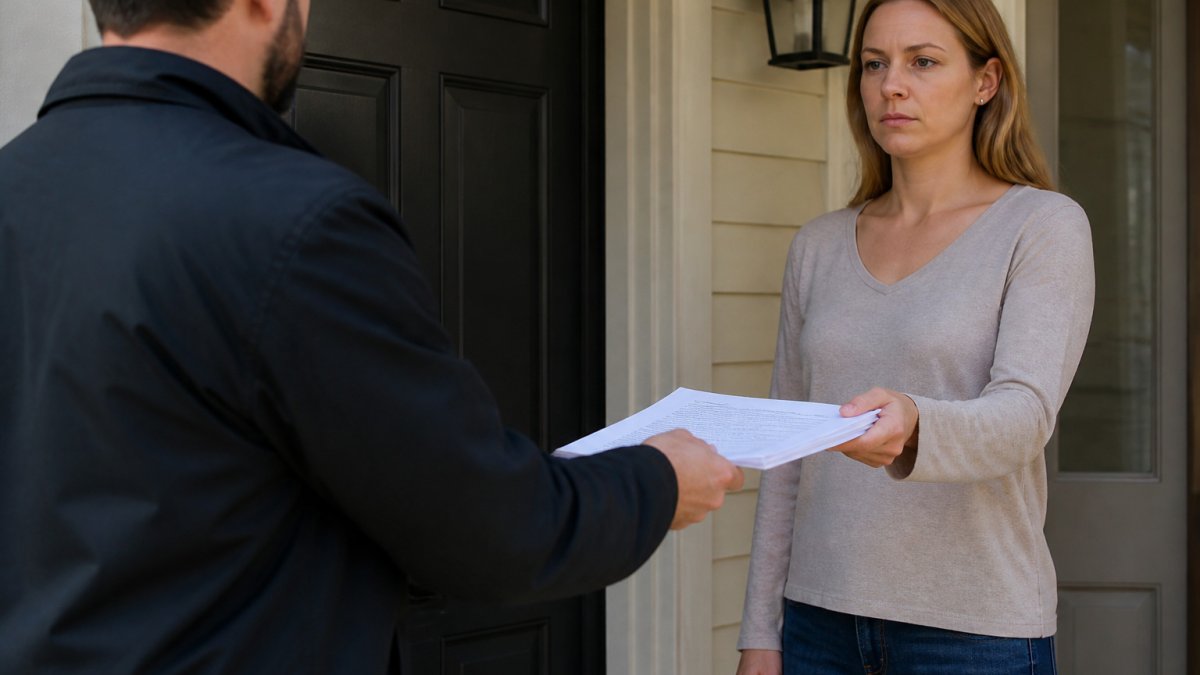
- Personal delivery (sheriff, marshal, or process server). The most reliable and widely accepted method. A neutral adult hands the papers to the spouse directly. Ask the clerk whether the sheriff serves family-law papers in your county and what the current fee is.
- Waiver or voluntary acceptance. The spouse signs a written, often notarized, waiver agreeing to accept service. This is usually the fastest and least confrontational route when the spouse is cooperative. The waiver typically comes with a deadline to return it; if the spouse does not return it, you must serve formally.
- Substitute service (abode service). Papers are left at the spouse's home or workplace with a suitable adult and then mailed. Courts generally require proof of prior attempts at personal delivery. Only use this when your state permits it.
Step 4: Serve the Papers
Deliver the summons and a copy of the petition, and any other documents your court requires, using the method you selected. The server should record the date, time, address, and the name and description of the person served. If the spouse refuses to take the papers, the server should note the refusal; in many states, a documented refusal still counts as service.
Step 5: File Proof of Service
After service, the server completes a return of service or affidavit of service and files it with the clerk. This is covered in detail in the proof-of-service section below.
Step 6: Track the Respondent's Deadline
Once served, the spouse has a set number of days to respond. Confirm the exact deadline for your case with the clerk, because missing it can affect default and scheduling.
Special Circumstances to Plan For
-
High-conflict or unsafe spouse. Use a sheriff or professional server rather than a friend, avoid direct confrontation, and consider whether your address should be kept off documents where the court allows it.
-
Out-of-state respondent. Service must comply with the forum state's rules and may also need to satisfy the serving state's requirements. A process server licensed in the respondent's state is often the cleanest route.
-
Military deployment. Federal protections may apply, and courts often require additional steps or stays. Raise this with the clerk or an attorney before serving.
-
Personal delivery: Most reliable and widely accepted
-
Waiver or voluntary acceptance: Requires the spouse's signed agreement and is usually fastest
-
Substitute service: Allowed only after attempts at personal delivery fail
The article lays out a six-step sequence, with the main service methods and their key conditions summarised below.
| Step | What to do | Note |
|---|---|---|
| Confirm jurisdiction rules | Check state and county service rules and proof form | Rules vary by state and county |
| Prepare petition and summons | Check names, dates and case number | Errors cause rejected returns |
| Choose a service method | Pick personal, waiver, substitute, mail or publication | Depends on spouse's cooperation |
| Serve the papers | Deliver summons and petition by chosen method | Record date, time, address and recipient |
| File proof of service | Server completes return or affidavit and files it | Filed with the court clerk |
| Track respondent's deadline | Confirm the response deadline with the clerk | Missing it affects default |
How to Serve Divorce Papers by Mail
Mail service is allowed in some states, but the rules are strict.
Mail service works best when the spouse is cooperative and easy to reach.
Keep copies of everything you mail. Save the tracking number, the receipt, and the signed return card.
Watch out: A certified letter that is unsigned or returned unclaimed usually does not count as valid service.
Proof of Service for Divorce Papers and How to File It
After the papers are served, the server must prove it. This proof is usually called a return of service or an affidavit of service, a sworn statement describing who was served, when, where, and how. Getting this document right is what lets the court's deadlines start running and what protects the case from a later challenge.
What the Server Should Record
A complete proof of service typically includes:
- The full name of the person served, plus a physical description if the person refused to give a name
- The date, time, and street address of service
- The method used (personal delivery, substitute service, certified mail, publication)
Vague or incomplete proof is a common reason clerks reject a filing. Ask the clerk whether the court has a specific form before the server signs anything.
Where and When to File Proof
The completed form goes to the court clerk for filing, usually in the same case where the petition was filed. File it promptly, many courts will not schedule hearings or enter a default until proof is on the record. Keep a stamped or electronically filed copy for your own records, along with the server's original notes.
How to Confirm the Court Accepted It
Filing is not the same as acceptance. After filing, check the case docket online or call the clerk to confirm the proof was entered and not rejected. If the clerk flags a defect, correct it quickly, most courts allow an amended or corrected return of service, but the delay can push back every later deadline.
Troubleshooting Rejected or Defective Service
- Proof rejected for a missing detail. Ask the clerk exactly what is missing, have the server complete a corrected affidavit, and refile. Keep the original on record.
- Spouse evaded service. Document each attempt (date, time, address, result) and ask the court whether substitute service or publication is available.
- Certified mail returned unclaimed. This usually does not count as valid service. Switch to personal delivery or another method your state allows.
- Include the date, time, and address of service
- Describe the person who was served
- Have the server sign under oath where required
Serving Divorce Papers When Your Spouse Cannot Be Found
Sometimes the spouse cannot be located. They may have moved, changed numbers, or avoid being served. In these cases, the court may allow alternative steps.
Courts often ask for records of each attempt. Keep notes on dates, times, addresses, and results.
Service by publication is a last resort in many states. This means publishing a notice in a newspaper for a set period.
A lawyer can explain which options your court accepts.
Booking Your Consultation on Serving Divorce Papers
Serving divorce papers can feel stressful, especially when the other spouse is hard to reach. Getting clear guidance early can help you avoid mistakes that slow the case down.
The Law Office of Thomas K. Mallon, LLC offers a free consultation to talk through your situation. During the meeting, you can review your paperwork, ask questions about service, and learn your options.
Frequently Asked Questions
Who can serve divorce papers?
In most United States jurisdictions, any adult who is not a party to the case can serve divorce papers, but many states restrict who may serve, and some require a sheriff, a licensed process server, or a court-authorized person. A party to the divorce, meaning either spouse, cannot serve the papers. Check your state's rules of civil procedure or your court clerk's office to confirm who is authorized where you file. Using an unauthorized server can make service defective and delay the case.
Can divorce papers be served by mail?
Many states allow service by certified mail with return receipt requested, but the rules differ widely. Some require the spouse to sign the receipt personally, and others only accept mail service if the spouse signs a written acknowledgment or waiver. Because a mailed package can be refused or left unsigned, confirm whether your state accepts certified mail and what proof it requires before relying on it.
What is proof of service for divorce papers?
Proof of service is a sworn document, often called an affidavit of service or return of service, that shows who delivered the papers, when, where, and how. It must be signed by the server, often before a notary, and filed with the court clerk. Filing it establishes on the record that the spouse received notice, which the court needs before it can move the case forward or enter a default judgment.
What should you do if your spouse cannot be found?
If repeated attempts to locate your spouse fail, many states permit substitute service, such as leaving papers with a household member or posting them at the residence, or service by publication in a newspaper as a last resort. These methods usually require a sworn statement describing a diligent search for the spouse. Requirements are strict, so a court order authorizing the method is typically needed before you use it.
Get the support you need to serve divorce papers correctly. Schedule Your Free Consultation with The Law Office of Thomas K. Mallon, LLC to protect your rights and move your case forward.