 how-to
How to File for Uncontested Divorce in Maryland
Table of Contents
- What Makes a Divorce Uncontested in Maryland
- Maryland Mutual Consent Divorce Requirements
- How to File for Uncontested Divorce: Step-by-Step
- Maryland Divorce Settlement Agreement Template: What to Include
- How Long Does an Uncontested Divorce Take in Maryland?
- Cost of Uncontested Divorce in Maryland: What to Expect
- Common Mistakes That Cause Rejection and Delay
- When to Hire a Maryland Uncontested Divorce Lawyer
- Frequently Asked Questions
Last Updated: September 15, 2026
What Makes a Divorce Uncontested in Maryland
An uncontested divorce in Maryland is a dissolution of marriage where both spouses agree on every major issue: property division, debt allocation, and, if children are involved, custody and support. At The Law Office of Thomas K. Mallon, LLC, we offer over 25 years of experience helping Maryland families navigate family law matters. This guide walks you through how to file for uncontested divorce in Maryland.
Disagree on even one term, and the case becomes contested by definition.
Maryland Mutual Consent Divorce Requirements
Maryland mutual consent divorce requires both spouses to sign a written settlement agreement covering all marital issues and appear together at a final hearing.
Three conditions must be met:
- Both parties consent to the divorce
- A complete marital settlement agreement is signed and notarized
- At least one spouse meets Maryland's residency requirement
Residency and Jurisdiction Rules
At least one spouse must be a Maryland resident, and the court must have jurisdiction over the marriage and the parties. Residency is typically established through a driver's license, voter registration, or tax records showing a Maryland address. If you've recently moved, gather documentation early. The Maryland Judiciary's family law resources explain which circuit court handles your case based on county of residence.
Grounds and the Mutual Consent Path
Maryland recognizes both fault and no-fault grounds. Mutual consent is a no-fault path: you don't need to prove wrongdoing, only that both parties agree. This is why it's usually faster and less expensive than a fault-based filing.
How to File for Uncontested Divorce: Step-by-Step
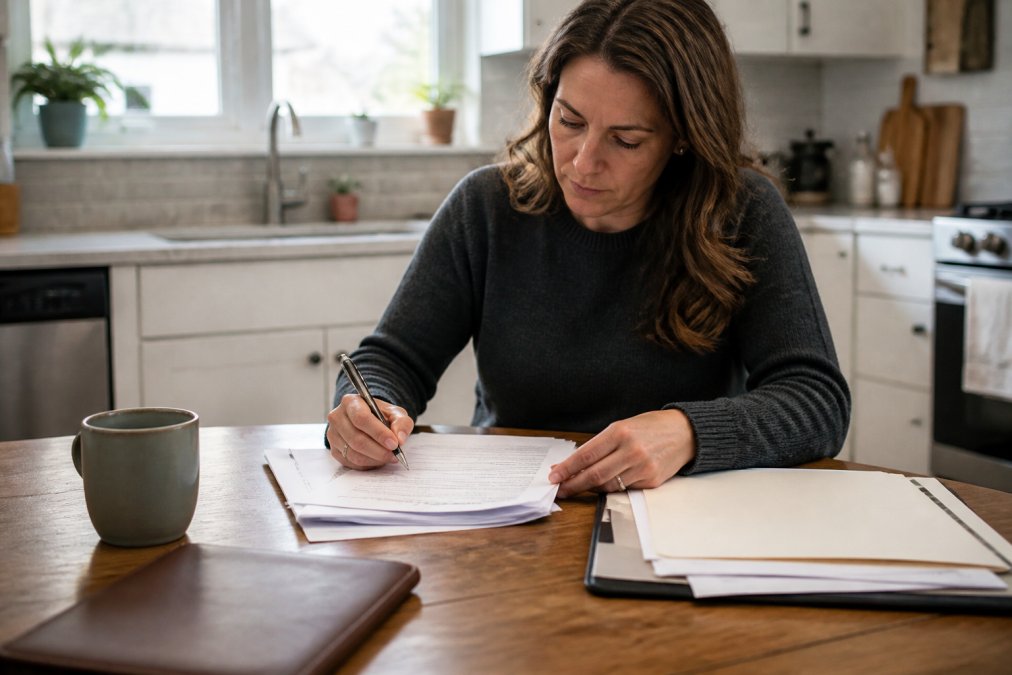
The process follows a predictable sequence: draft the agreement, file the complaint, serve your spouse, and attend the final hearing.
- Confirm eligibility. Verify residency and that all issues are settled.
- Draft the marital settlement agreement. Both spouses sign and notarize it.
- Complete the required court forms. Your circuit court provides the packet.
- File the petition for dissolution of marriage with the clerk of the court.
- Serve the respondent with a summons and copies of the filed documents.
- Attend the final hearing and present the signed agreement.
Required Forms and Documentation
Expect a complaint or petition, a civil domestic case information report, a marital settlement agreement, and financial statements if support is involved. Each circuit court publishes its own packet. The Maryland Courts self-help center maintains current forms by county, so download the version for your jurisdiction rather than an older copy.
Filing Fees and Fee Waivers
Filing fees vary by circuit court and change periodically. Rather than guess at a figure, request the current fee schedule directly from your county's clerk. If paying the filing fee would create hardship, you can ask the court to waive it by submitting a fee waiver request. The Maryland Judiciary fee waiver guidance outlines the eligibility criteria and the affidavit you'll need.
Service of Process and the Respondent's Role
Service of process is how your spouse officially receives notice. Because both parties cooperate in a mutual consent case, the respondent can sign an affidavit accepting service, avoiding the cost of a process server, then file an answer consenting to the divorce.
Maryland Divorce Settlement Agreement Template: What to Include
A complete marital settlement agreement addresses property, debts, and children in enough detail that a judge can approve it without questions. Vague language is the most common reason agreements get sent back.
| Section | What It Covers | Why It Matters |
|---|---|---|
| Marital property | Real estate, vehicles, accounts, retirement | Prevents future disputes over ownership |
| Marital debts | Credit cards, loans, mortgages | Assigns responsibility clearly |
| Custody and visitation | Legal and physical custody schedule | Required when minor children exist |
| Child support | Amount and payment method | Must meet Maryland guidelines |
| Alimony | Amount, duration, or waiver | Must be explicit, even if waived |
Dividing Marital Assets and Debts
Maryland follows equitable distribution, a fair division rather than a strictly equal one. List every asset and debt, assign each to one spouse in plain terms, and note that retirement accounts and pensions often require a separate court order to divide.
Custody, Visitation, and Minor Children
When minor children are involved, the agreement must address legal custody, physical custody, and a visitation schedule. Courts review these terms against the child's best interests, so specificity helps. Maryland requires child support to follow state guidelines unless both parties justify a deviation in writing.
How Long Does an Uncontested Divorce Take in Maryland?
How long does an uncontested divorce take in Maryland? Most mutual consent cases conclude in roughly two to four months from filing, depending on your county's docket and how quickly the agreement is finalized. A complete, error-free packet is the fastest way to avoid delays.
Here is the post-filing roadmap.
What Happens After You File
Once the clerk accepts your packet, the case is assigned a docket number and a track:
- Docketing. The clerk stamps and enters the case.
Tracking Your Case Status
What to Do During the Waiting Period
Submitting the Final Decree
Cost of Uncontested Divorce in Maryland: What to Expect
The Line Items That Actually Show Up
| Cost Category | What Drives It | Typical Range |
|---|---|---|
| Circuit court filing fee | Set by each county; changes periodically | Confirm with your clerk |
| Service of process | Affidavit of acceptance vs. private process server vs. sheriff | Lowest with affidavit |
| Notary | Per-signature or per-document, often at banks or shipping stores | Small but recurring |
| Certified copies of the final decree | Per page, per copy | Needed for name changes, deeds, benefits |
| Attorney review or full representation | Flat fee vs. hourly; scope varies widely | Get it in writing |
| Mediation (if any term stalls) | Hourly, split or not | Only if agreement breaks down |
| Qualified Domestic Relations Order (QDRO) | Separate drafting and court entry for retirement plans | Often overlooked |
Hidden Costs Most Guides Skip
Fee Waivers: Check Before You Pay
Attorney Fees: Flat Fee vs. Hourly
Common Mistakes That Cause Rejection and Delay
When to Hire a Maryland Uncontested Divorce Lawyer
Frequently Asked Questions
What are the residency requirements for filing for divorce in Maryland?
Maryland requires at least one spouse to be a resident of the state when the divorce is filed. If the grounds for divorce happened outside Maryland, the residency requirement is longer. If the grounds occurred in Maryland, the filing can proceed once residency is established. Because these rules depend on your specific situation, check the Maryland Judiciary's official self-help resources or speak with a Maryland family law attorney to confirm you meet the threshold before filing.
How long does an uncontested divorce take in Maryland?
The timeline for an uncontested divorce in Maryland depends on the court's docket, whether the parties have a signed settlement agreement, and whether a hearing is required. Some cases move quickly once all paperwork is filed correctly; others take longer if the court is backed up or if documents need correction. The Maryland Judiciary publishes current processing times, and a local attorney can give you a realistic estimate based on your county.
Do I need a lawyer for an uncontested divorce in Maryland?
You can file for an uncontested divorce in Maryland without a lawyer, and many people do. However, a lawyer can provide valuable guidance to help avoid common pitfalls, ensure your settlement agreement addresses all necessary aspects, and clarify the court's review process. For straightforward cases with no minor children and few assets, self-representation may work. For anything involving custody, property, or retirement accounts, professional guidance can be beneficial.
Why would a judge reject an uncontested divorce settlement agreement?
A judge may reject a settlement agreement if it is vague about asset division, fails to address child support or custody adequately, or does not meet Maryland's requirements for a valid marital settlement agreement. Missing notarized signatures, incomplete financial disclosures, or terms that conflict with state law are common reasons. Reviewing your agreement against the Maryland Judiciary's forms and having a lawyer check it before filing reduces the risk of rejection and a delayed final decree.
Filing for uncontested divorce should feel manageable, not overwhelming, but one missed form or vague clause can set you back weeks. The Law Office of Thomas K. Mallon, LLC brings over 25 years of family law experience, a client-centered approach, and a free consultation to help you file correctly the first time. Get started with The Law Office of Thomas K. Mallon, LLC and move through your divorce with clarity and confidence.